Pool Recirculation Time in Spain: Hours by Season
June 2026

The short answer: it depends on the month
Pool owners in the UK or Finland often ask whether the same rules apply here. They don't. The Costa del Sol is not northern Europe. Temperatures above 35°C in July and August burn through chlorine far faster than the mild summers most owners are used to, and the UV at this latitude is strong enough to degrade free chlorine in hours rather than days. A schedule that works in Birmingham or Helsinki will leave your pool green before you notice.
In practice a pool in Spain needs more attention in summer than almost any other climate in Europe, and less in winter than most owners assume. Get the frequency right by season and your pool is always ready to swim in. Get it wrong and you pay for corrective work every spring.
| Season | Months | Recommended frequency | Priority tasks |
|---|---|---|---|
| Peak summer | Jun, Jul, Aug | Weekly | Chemistry balance, chlorine top-up, skimming, filter check |
| Shoulder season | Apr, May, Sep, Oct | Every 2 weeks | Chemistry balance, brushing, basket emptying |
| Winter | Nov, Dec, Jan, Feb, Mar | Monthly or bi-monthly | Pump and filter check, algaecide, light chemistry balance |
Why summer demands weekly visits
Three things happen at once in a Costa del Sol summer. The heat speeds up chlorine consumption, so a pool that might stay balanced for ten days in spring can run out of free chlorine in three or four days in August. Evaporation matters too. Water levels drop, dissolved solids concentrate, and pH tends to drift upward, which makes whatever chlorine is left less effective. On top of that, a property rented out in summer carries a bather load that depletes the sanitiser further.
Put those together with no service visit for two weeks and the chemistry window closes fast. The pool looks fine on day one, fine on day five. By day ten to fourteen, algae has a foothold and you'll see a green tint along the walls and steps. A normal visit won't fix it at that point. You need a shock treatment, repeated doses over several days, the filter running longer, and a follow-up visit to confirm the water has cleared. That remediation costs noticeably more than the weekly visits that would have prevented it.
This is what catches owners abroad out. You can't see it developing. If the pool hasn't been checked for two weeks and you are in London or Helsinki, you have no way to know the chemistry has drifted until someone on site tells you.
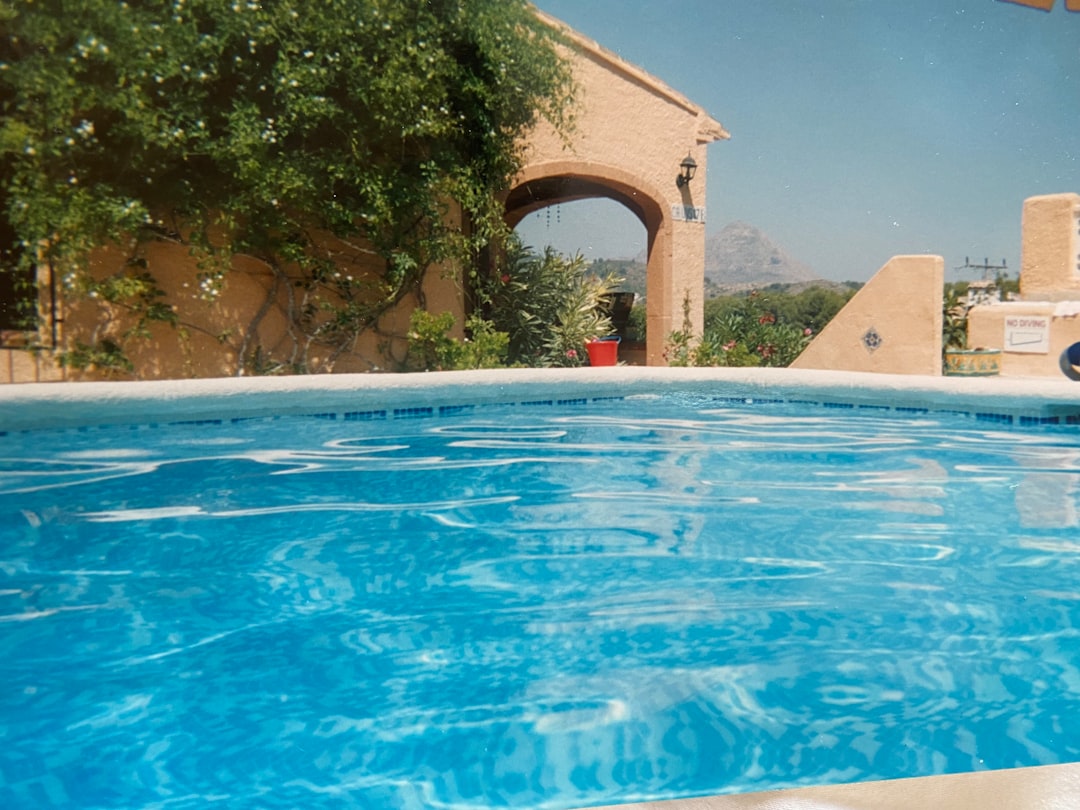
The shoulder seasons: April to May and September to October
These are the months owners most often relax the schedule too far. Temperatures are lower than peak summer, fewer people swim, and the pool looks fine. The chemistry drift is slower, but it hasn't stopped. A pool left on monthly visits through May often reaches the June rental season with elevated pH, weaker chlorine, and the first algae growth on the walls.
Fortnightly visits through the shoulder months keep chemistry stable and let you catch mechanical issues early. The pump and filter work hard all summer. By September, filters may need backwashing more often. Pump baskets fill with leaf fall as the season turns, and skimmer weirs that were clear in July can clog quickly in October once nearby trees start shedding. Catching that on a visit is straightforward. Catching it after three weeks of inattention is a longer job.
If the property is also rented through May or October, treat those months closer to summer frequency than winter frequency.
Winter: less frequent, but not zero
The Costa del Sol does not get the hard frosts that make full winter closure necessary further north. Pipes rarely need draining, and most pools stay operational year-round. That is exactly why ignoring them entirely is a mistake. A pool left untouched from November to March will need corrective work in April that a basic monthly or bi-monthly check would have prevented.
Winter visits are simpler. Check that the pump and filter are running correctly. Test and adjust the chemistry so algae can't establish in cooler water (it still can, just more slowly). Keep the pool clean enough that it doesn't become a problem. A pool that goes into spring in good condition opens in a day. A pool ignored all winter may take a week of active treatment before anyone can swim in it.
When the property sits empty through winter, this is also when small problems grow without anyone noticing. A slow pump seal leak. A cracked tile at the waterline. A skimmer that has collected enough debris to restrict flow. All of these are easy to find on a winter visit and minor to fix. All of them get more expensive if they run for three or four months undetected.
What a service visit should actually cover
Frequency matters, but so does what gets done each time. A visit that only tips in some chlorine and leaves misses most of the picture. A proper visit tests the full chemistry panel: free chlorine, pH, and alkalinity at minimum, with stabiliser and calcium hardness checked less often. pH outside the 7.2-7.6 range cuts the effectiveness of whatever chlorine is in the water, so adding more chlorine without correcting pH is wasted product. Alkalinity is what holds pH steady between visits. Let it drift too low and pH becomes erratic and harder to control.
Chemistry isn't the whole job. Brushing the walls and steps is not optional, because algae starts as a biofilm on surfaces before it shows in the water, and brushing breaks that up. Emptying the skimmer and pump baskets keeps the pump from running restricted. A quick look over the pump, filter, and visible fittings catches mechanical issues before they turn into failures.
For owners using a pool maintenance service, the visit record should set out what was found, what was adjusted, and what (if anything) needs attention. That is useful in the short term, because you know what state the pool was in last week, and in the long term, because you have a maintenance history if you sell the property or make an insurance claim.
The specific problem for owners who are not on site
If you live in Spain and pass your pool every day, you notice problems early. The water looks slightly off, the pump sounds different, the skimmer is full. You act before it compounds.
If you are abroad and the property is empty or rented, you depend entirely on whoever services the pool to tell you what is going on. That is where documentation stops being paperwork and starts being useful. An owner in the UK or Germany whose pool has turned green needs to know: was the last visit two weeks ago or four? What were the chemistry readings? Was anything flagged?
Without records, the answer is usually a phone call or a WhatsApp message to whoever did the last visit, and what you get back depends on whether they reply. With a documented visit record, the history is simply there. What the crew found, what they adjusted, the photos of the water before and after, all of it traceable.
Every visit completed through SolidMaint produces a written report in the owner's language and a before-and-after photo record. The photo requirement isn't optional: no photos, no completion. Those records land in the Property Vault, the property's permanent maintenance history. If something goes wrong with the pool in August and you are in Helsinki, you can see exactly what state it was in at the last visit and what was done about it.
When the pool issue turns out to be connected to something else, say a pump failure that needs both a pool specialist and an electrician, our Property Coordination service handles the cross-trade scheduling. You don't end up managing two separate contractors from another country.
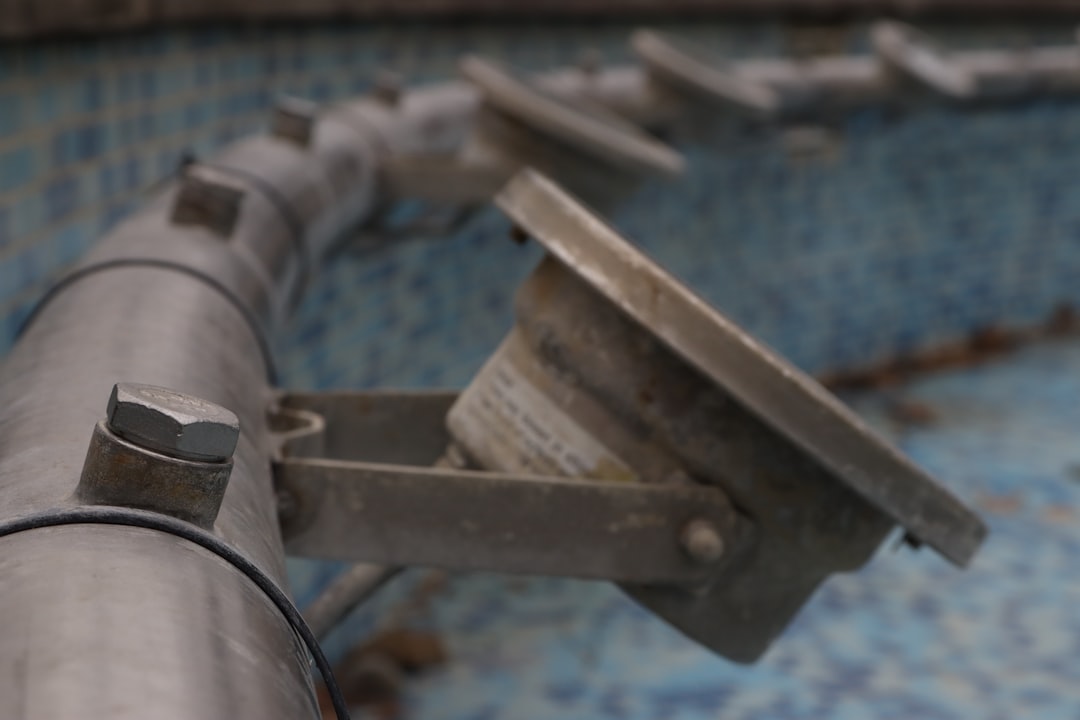
Equipment checks: what gets missed on a chemistry-only visit
Pool equipment is often serviced separately from water chemistry, and that gap catches up with owners. The pump, filter, and pipework carry most of the load in summer. Filter media needs backwashing, and eventually replacing. Pump seals can develop slow leaks that waste water and, left long enough, damage the motor. The pressure gauge on the filter is one of the simplest health checks you have: a given pool runs at a consistent operating pressure, a clear rise usually means a dirty filter, and a clear drop can mean a blockage or a pump fault.
Chemicals won't fix a mechanical problem. A pool with a struggling filter clouds up even when the chemistry is right, because the filtration cycle isn't turning over the volume it should. Visits that cover both chemistry and equipment give you the full picture.
For more detail on what we cover and how visits are priced, see the current pricing page.
Putting it together: what a well-maintained pool looks like year-round
A pool serviced weekly from June through August, fortnightly in April, May, September, and October, then monthly through winter will almost never need emergency corrective work. The chemistry holds. Equipment issues get caught early. The water is ready whenever you or your guests turn up.
The alternative is a schedule that gets set and then quietly neglected, and it looks fine right up until it doesn't. The pattern is familiar: an owner arrives in July to find the pool green or cloudy, the filter pressure high because nobody has backwashed it since April, and a rental guest checking in three days later. A consistent schedule is what keeps you out of that situation.
If you are running a property on the Costa del Sol from abroad and you aren't sure whether your current pool service is genuinely delivering weekly visits in summer, the visit record should tell you. If there is no record, you already have your answer.